|
 |
|
|
| |
 |
Kastellorizo Island |
Information on Kastellorizo holidays - Greece |
| |
|
|
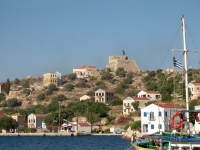
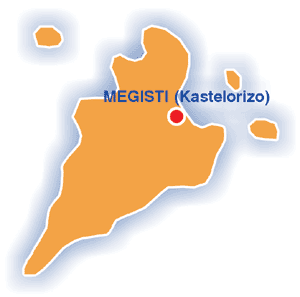
At the south easternmost edge of Greek dominion, spreads out the calm and beauty of Kastellorizo island. Belying former grandeur of the island of Megisti, as it is officially know from ancient times. The island has a total surface of 9,2 km2 and is located 72 miles east of Rhodes and only 2 kms from the turkish coast. It is a mountainous and rocky island that combines beautiful scenery, ancient monuments, kind people, peaceful holidays and relaxation. |
 |
|
|
|
|
 |
About Kastellorizo island! |
|
|
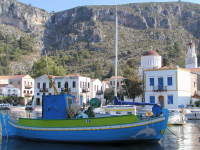 Kastellorizo, the only settlement of the island, is both the harbor and the capital of the island. It consists of the districts Pigadia, Horafia and lastly Mandraki (small picturesque port). The picturesqueness of the scenery upon arrival on the island, cannot be easily described. The painted in impressive colours two and three story renovated mansions with their wooden staircases and balconies, make it unrivalled in beauty amongst other islands. The town has been proclaimed preserved and it offers the visitor the beauty of an idyllic landscape and the nostalgia of a past glory. In past times the capital, which is also the port of the island, was Kastellorizo, the only settlement of the island, is both the harbor and the capital of the island. It consists of the districts Pigadia, Horafia and lastly Mandraki (small picturesque port). The picturesqueness of the scenery upon arrival on the island, cannot be easily described. The painted in impressive colours two and three story renovated mansions with their wooden staircases and balconies, make it unrivalled in beauty amongst other islands. The town has been proclaimed preserved and it offers the visitor the beauty of an idyllic landscape and the nostalgia of a past glory. In past times the capital, which is also the port of the island, was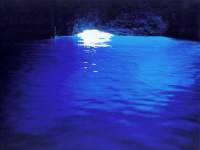 the most important geophysical gift of Kastellorizo, since due to its geophysical position it was a trade crossroad between Europe, the Middle East and Egypt.
It was only natural that it generated an important amount of economic and nautical trade which explains the noble air about the island that reflect its past glory and prosperity. On the island there are no buses - just one taxi! Car and motorcycle circulation is prohibited and you will cover all distances on foot. The well-preserved foot paths are ideal for long walks. You will swim on Faros, Plakes, Mandraki and the beaches of the islets of Ro, Aghios Georgios and Strogilli. the most important geophysical gift of Kastellorizo, since due to its geophysical position it was a trade crossroad between Europe, the Middle East and Egypt.
It was only natural that it generated an important amount of economic and nautical trade which explains the noble air about the island that reflect its past glory and prosperity. On the island there are no buses - just one taxi! Car and motorcycle circulation is prohibited and you will cover all distances on foot. The well-preserved foot paths are ideal for long walks. You will swim on Faros, Plakes, Mandraki and the beaches of the islets of Ro, Aghios Georgios and Strogilli. |
|
|
|
|
Kastellorizo History |
|
| |
 Little is known concerning the island's ancient history due to the few written accounts referring to it and the fewer still systematic excavations carried out on Kastellorizo island. Neotlithic tools, pre-historic walls, stone hewn tombs, a gold crown from the Mycenaean period, Doric inscriptions and other findings witness to the fact that the island has been inhabited continuously from very ancient times. Little is known concerning the island's ancient history due to the few written accounts referring to it and the fewer still systematic excavations carried out on Kastellorizo island. Neotlithic tools, pre-historic walls, stone hewn tombs, a gold crown from the Mycenaean period, Doric inscriptions and other findings witness to the fact that the island has been inhabited continuously from very ancient times.
Read more... |
|
| |
|
|
Kastellorizo SITES/MUSEUMS |
|
|
The sites to be seen are:
- The Castle of the Knights of the order of St. John dating back to the 14th century.
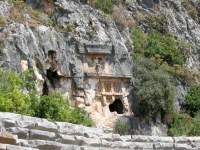
- The perfectly preserved stone-hewed Lycean tomb underneath the castle at the port entrance.
- Palaiokastro - the eldest site on Kastellorizo island. There you will see the remains of ancient buildings, water cisterns and neolithic tools.
- The Metropolis of St. Constantine and Helen - the saint patrons of Kastellorizo island.
- The archaeological Museum.
- The famous Aqua-colored Cave of Kastellorizo is one of the rarest geological phenomena and one of the most amazing formations on Earth; Kastellorizo is worth visiting just for this cave only. This panoramic sea cave is also known with the name “Parastas hole” or “Fokiali” – due to the seals ( fokia ) that live inside – and it is the most phantasmagoric cave of the Mediterranean Sea . It is said to be superior to the “CROTTA AZZURA” of Capri near Naples , Italy , as Victor-Emmanuel the King admitted when he visited it in 1929. It is situated at the SE coastal region of the island, it is 75m long (inside), 40m wide and 35m high, and the entrance is as high as a small boat – which can just pass through the mouth when the sea is calm at dawn. The calm waters of the cave look like an immense blue-green mirror with plenty of iridescence, which seems to illuminate this enormous fairy-like palace, the numerous stalactites and the thousands of wild pigeons, with various colors.
|
|
|
|
| |
| [back to top] |
|
|
|
|